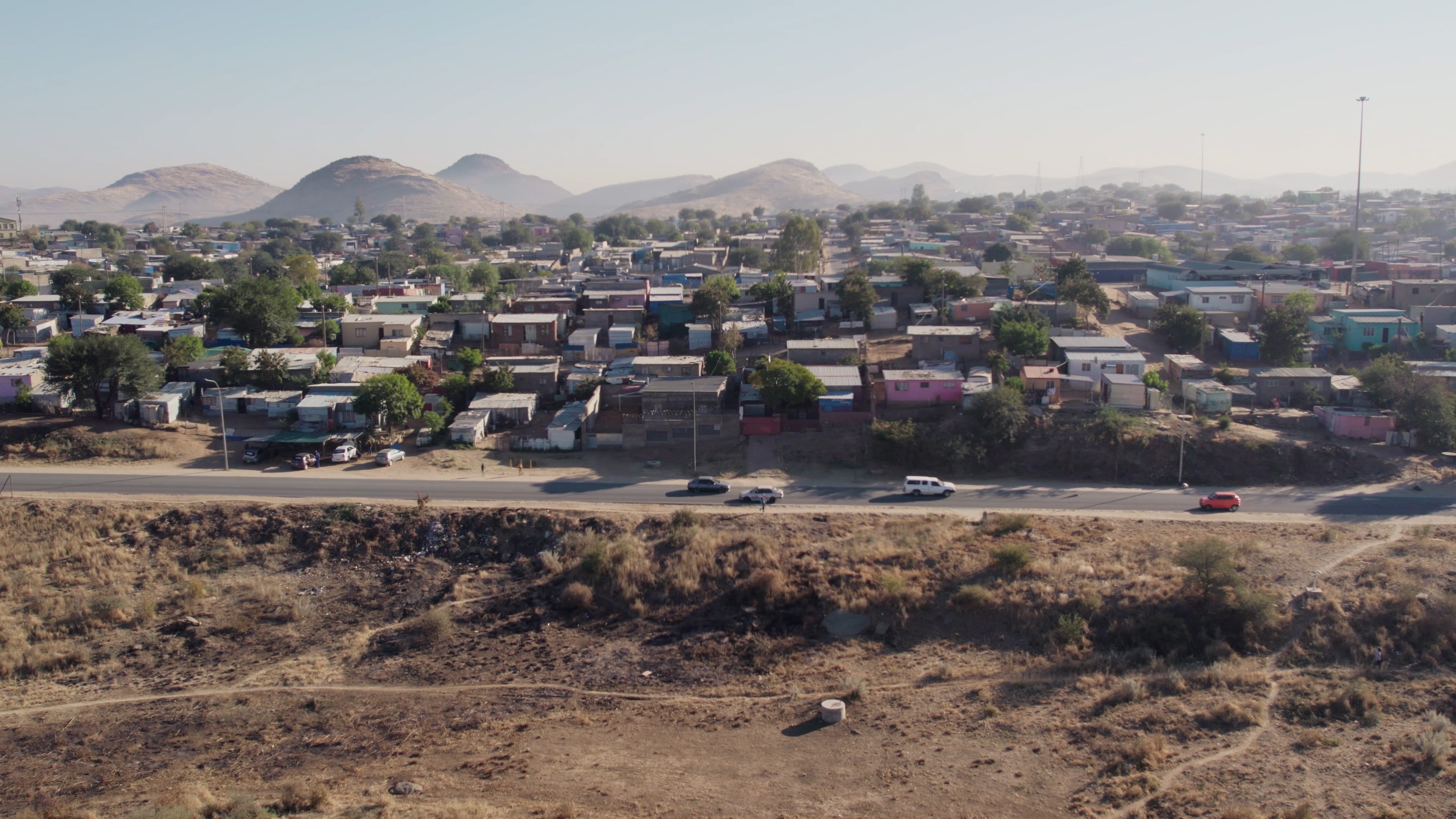
A city spreading across river catchments and open ground — thin, low-density, hard on its ecology. Fully realised, its footprint would rank among the largest on earth by area, at a fraction of the density of a compact city.
We began on a contested open space between two schools, a vocational centre and a seasonal river. The place before the building.
One stock of matter, four lives — tower, classroom, sculpture, playground.
With Polycare, AEDI cast Polyblocks from reclaimed foundry sand and mine tailings — zero cement, zero water. Roughly twenty tonnes of waste, on its third life, locked into modular blocks that key together and pull apart by hand.
The block's colour is its supply chain — visible, traceable.
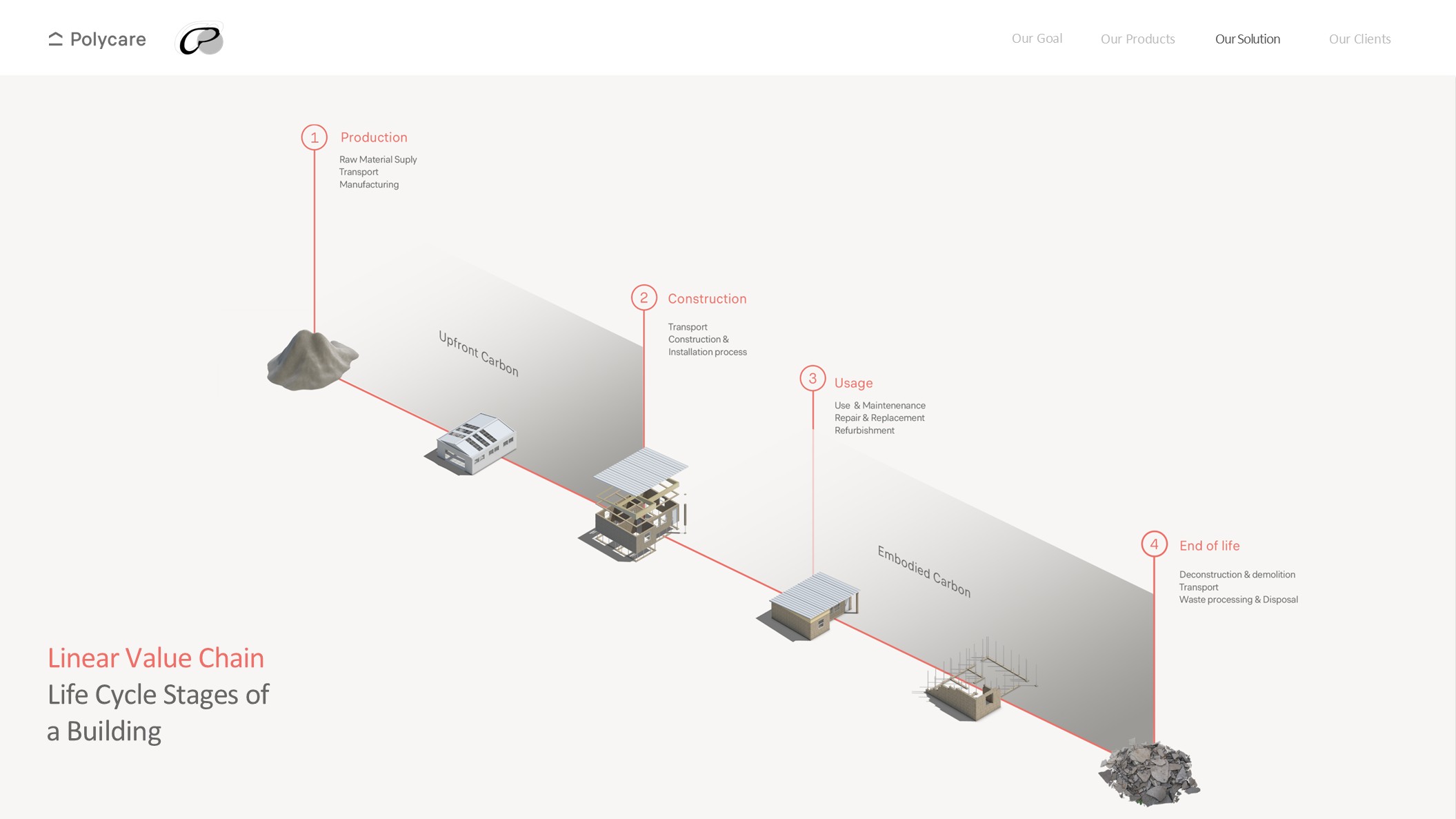
The conventional construction industry treats buildings as disposable. Linear extraction, embodied carbon, end-of-life waste.
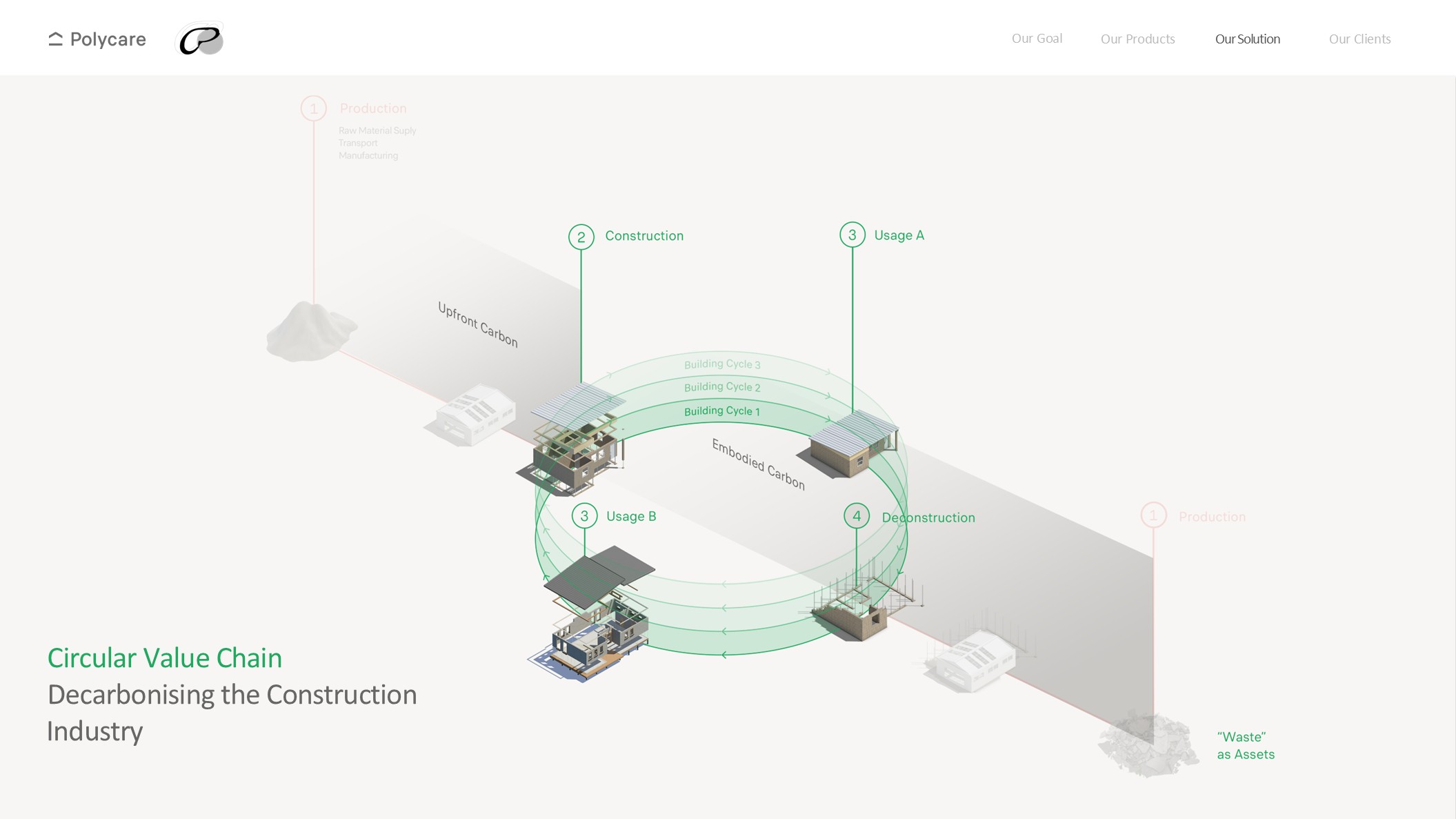
A circular model keeps materials in use across multiple building cycles — reducing upfront carbon and turning waste into assets.
Not an end-of-life, but a research event — the same matter held in continuous circulation.
A research event — vocational trainees raising a four-storey testbed from recycled blocks.
The tower came down and rose again as a pavilion — a blackboard in the landscape, where students write, erase and redefine its walls.
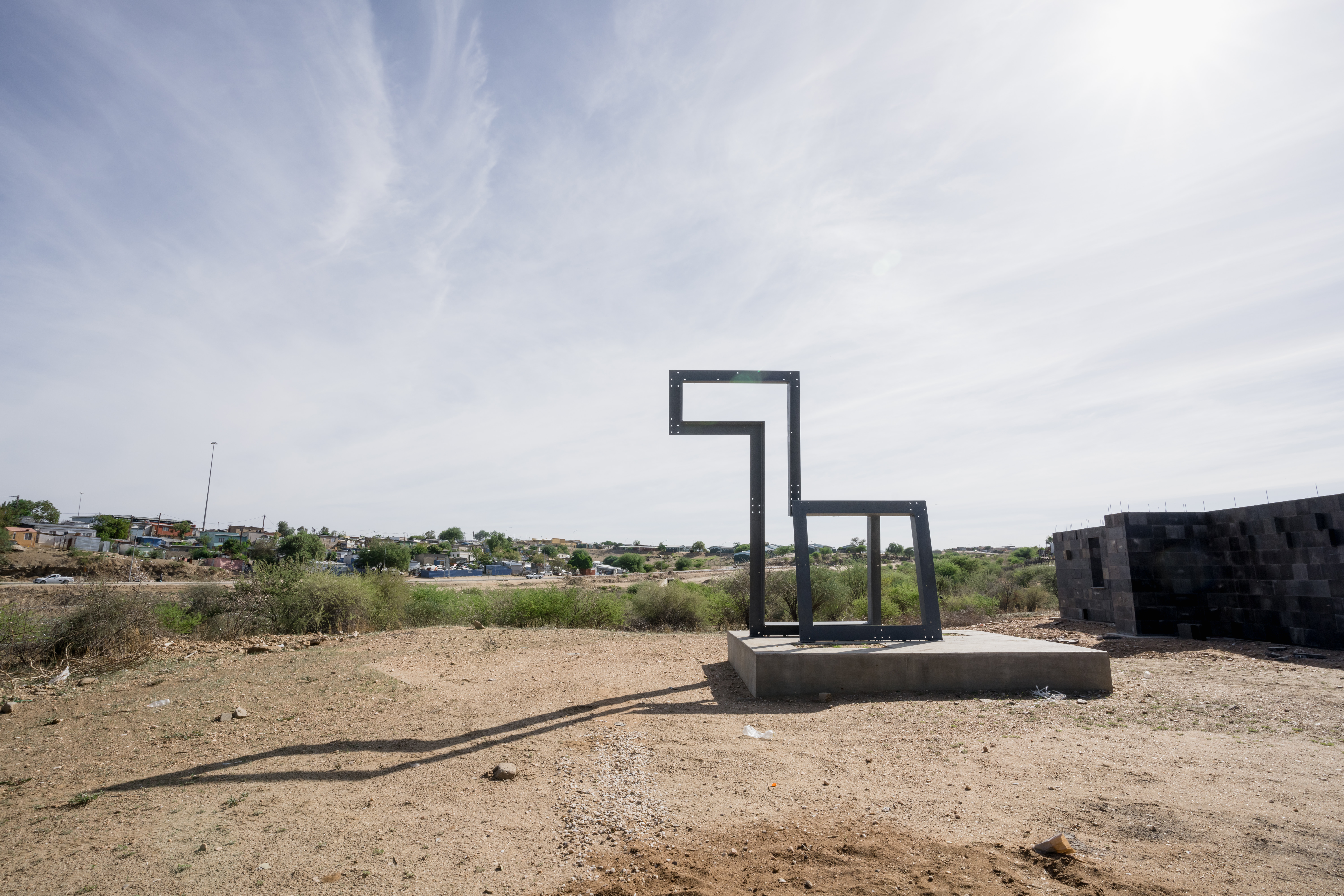
When the frame's work was done, it became a sculpture.
The tower's steel collar — extracted, welded and re-set — now stands as a public landmark in the schoolyard. Materials are never inert; they carry histories and keep moving between meanings.
Ore → foundry → structure → disassembly → sculpture. The nomadism of metal, made visible.
The tower was never the point. It was the first physical proof of a transition model that scales beyond any single object.
Waste streams become building stock — foundry sand and tailings cast into blocks, kept in service across lifecycles.
Designed for disassembly. The same components reassemble into schools, clinics or shelters — cutting upfront carbon.
Training, learning and public life built into the construction itself — skills and ownership that stay local.
Knowledge produced outside the institution — vocational trainees, schoolchildren and neighbours all leaving their mark on the wall. The building teaches by being used.
Clients don't need a tower. They need what the tower proved — a repeatable model for community climate adaptation.